
Gastrointestinal System
Antiemetics: Receptors, Drugs & When to Use Them
The five antiemetic receptor targets — 5-HT3, D2, H1, muscarinic and NK1 — matched to the cause of nausea, from chemotherapy to motion sickness and pregnancy.
High-yield notes, clinical insights, and exam-ready resources — curated by doctors who know what postgraduate students actually need.
Curated by Dr. Rahul Sanghvi · Pharmacology Postgraduate — resources built for MD / DNB / DM exam aspirants.
High-yield PharmaNotes covering all major topics — exam-pattern, concise, and clinically relevant.
Explore notes →Deep-dives into mechanisms, clinical pharmacology, drug interactions, and exam topics.
Read the blog →Thesis → manuscript, biostatistics & publication figures — via our partner AuraPharmLab.
See services →Ask doubts, share tips and connect with fellow pharmacology postgrads — moderated and spam-free.
Join the discussion →Play CuraClash — a medical study battle. Beat disease monsters by answering exam questions.
Play now →Explore an interactive city where every district is a drug class — learn each group right where it lives.
Enter the city ↗Run live polls, word clouds, Q&A and quizzes during your teaching — your audience joins instantly from their phones.
PharmaByMD gets you through the exam — our partner AuraPharmLab gets your research published: thesis → manuscript, biostatistics, figures and protocol writing, by a resident, for residents.
Thesis → Manuscript · Biostatistics · Figures & Tables · Conference posters · Protocol writing
A fresh set every visit — answer one at a time for instant feedback, then move to the next.
Q1. A non-inferiority trial aims to show the test treatment is:
Q2. Suxamethonium (succinylcholine) is a:
Q3. A feature of digoxin toxicity, worsened by hypokalaemia, is:
Q4. Standard H. pylori eradication uses:
Q5. Sympathetic post-ganglionic fibres to sweat glands release:
Q6. First-generation antihistamines (e.g. diphenhydramine) cause sedation because they:
Q7. Amphotericin B most importantly causes:
Q8. Good Manufacturing Practice (GMP) for drugs in India is specified under which Schedule of the Drugs & Cosmetics Rules?
Q9. β2 adrenergic receptors mediate:
Q10. Abrupt withdrawal of long-term corticosteroids can precipitate:
Q11. Tetracyclines are contraindicated in young children because they cause:
Q12. A CYP2D6 ultra-rapid metaboliser given codeine is at risk of:
466 theory questions across 33 topics · scored MCQ mocks against the clock
Free, interactive tools we’ve built for pharmacology teaching and revision. The games below are running live — jump in, or open any tool full-screen.
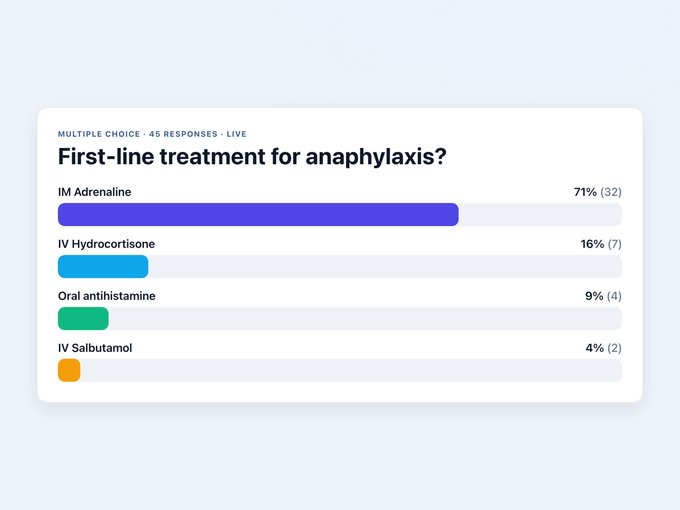
Students scan a QR and answer live MCQs, polls, word clouds and quizzes from their phones — results on screen instantly. Built for medical classrooms.
The most-tested facts across pharmacology on one printable PDF — ideal for last-minute revision. Get it free.
PharmaNotes Pro is a subscription library of exam-shaped MD Pharmacology notes, published by our partner AuraPharmLab — available now while we build our own series.
Each chapter is a long answer written for the 10-mark slot — around 800 words, illustrated and source-anchored, with new chapters added weekly.
An 813-page PDF of RGUHS MD Pharmacology recurring questions (Papers I–IV) — included with every subscription.
Monthly or annual plans from ₹199/month unlock every chapter, current and future — billed securely by AuraPharmLab.
The five antiemetic receptor targets — 5-HT3, D2, H1, muscarinic and NK1 — matched to the cause of nausea, from chemotherapy to motion sickness and pregnancy.
The participant journey through the CONSORT funnel — screening, eligibility, enrolment, the methods of randomisation, and allocation concealment vs blinding.
The trial’s blueprint — protocol contents, amendments, and the crucial difference between a protocol deviation and a violation.
Handled by our partner AuraPharmLab — a publishing studio built by a resident, for residents. PharmaByMD connects you; they do the work.
Convert your postgraduate thesis into a publication-ready article with proper formatting, abstract, and reference style.
Full biostatistical analysis with results interpretation — ANOVA, regression, survival analysis, and more.
Bar graphs, scatter plots, forest plots, and tables formatted to journal specifications (APA, Vancouver, AMA).
Structured research protocols and synopsis documents for institutional ethics committee submission.
Structured abstracts and academic poster designs for pharmacology and medicine conferences.
Literature reviews, case report write-ups, drug monographs, or any academic document — reach out to discuss.
PharmaByMD began as one postgraduate’s personal study notes — built from multiple sources, organised by exam pattern, and refined through every theory paper and viva.
Today it’s a dedicated space for pharmacology postgraduates: high-yield notes, illustrated articles, a live feed of pharmacology updates, and research support — all built by someone on exactly the same journey as you.

PharmaByMD — along with the StatMD live-polling tool and CuraClash learning game built alongside it — was inspired by my guide and mentor, Dr. Pooja Reddy, Professor of Pharmacology, SAIMS, Indore. Her encouragement, her patient teaching, and her belief that learning can always be made better turned a few personal study notes into something I hope helps postgraduates everywhere. With heartfelt gratitude, ma’am. 🙏

Pharmacology Postgraduate · founder of PharmaByMD. Focused on clear, exam-pattern pharmacology teaching and research support for MD / DNB / DM aspirants.